March Market Report

March 18, 2024

Market Report
March Market Report
The Big Story
 
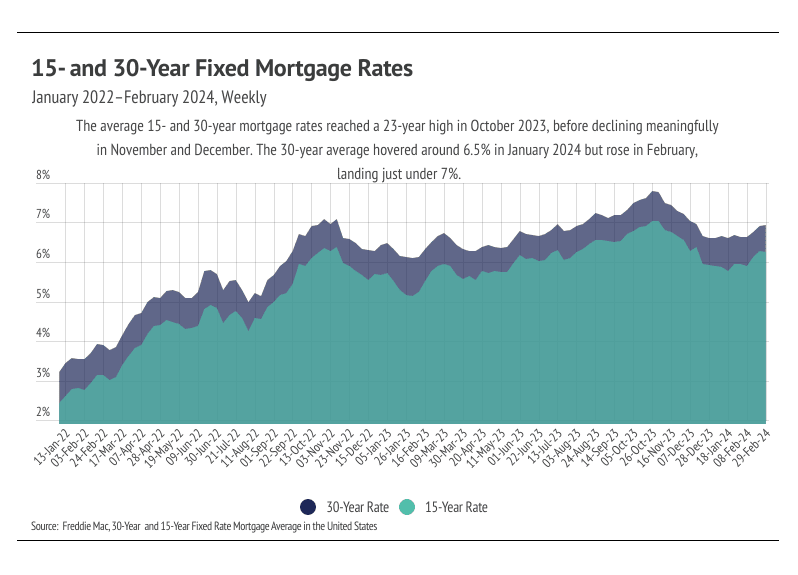
Mortgage rates increased in February, but their strong effect on the market may be waning
 
Quick Take:
  • Mortgage rates rose in February, closing the month at 6.94%. However, the Fed will almost certainly cut rates at some point this year, so potential homebuyers would only need to service the current rate level for a short period of time before refinancing.
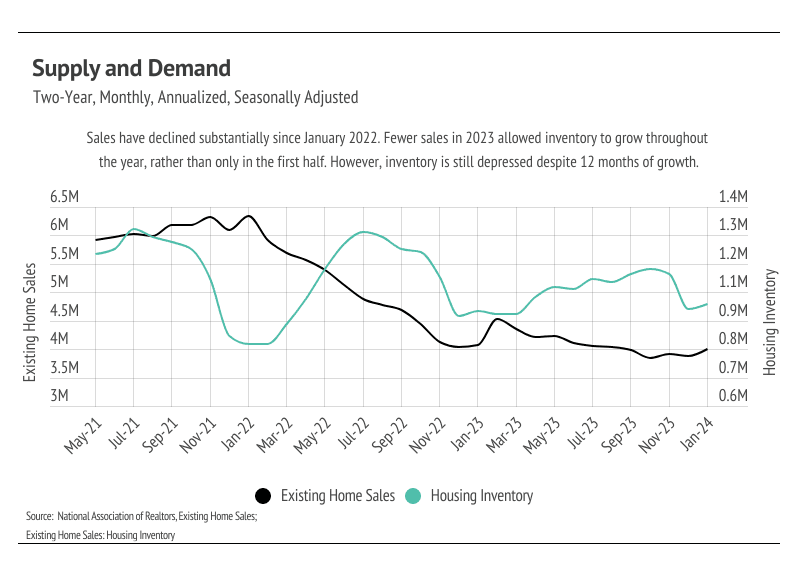
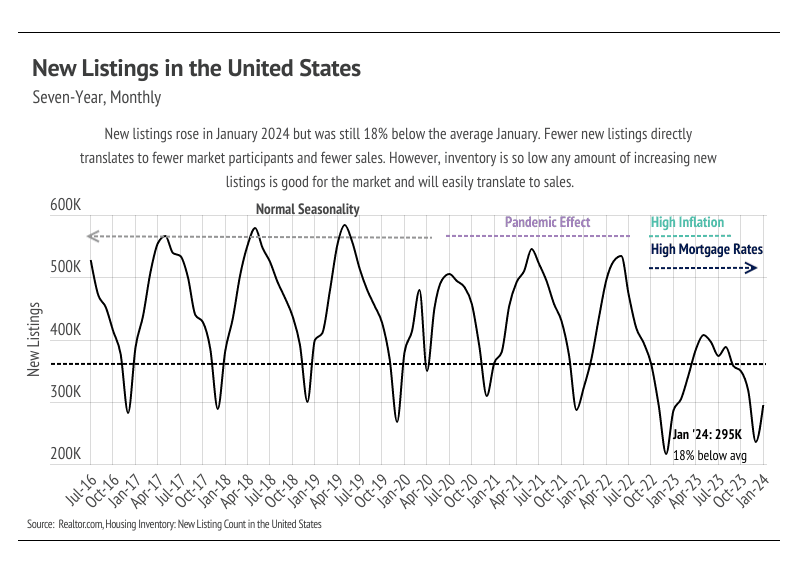
  • Sales increased 3% month over month, which, although still low, is a sizable increase. More homes are coming to the market and quickly translating to more sales. Inventory increased 2%, as new listings rose by 25%. More supply and growing demand are good for the market, especially this time of year — right before the busier spring and summer seasons.
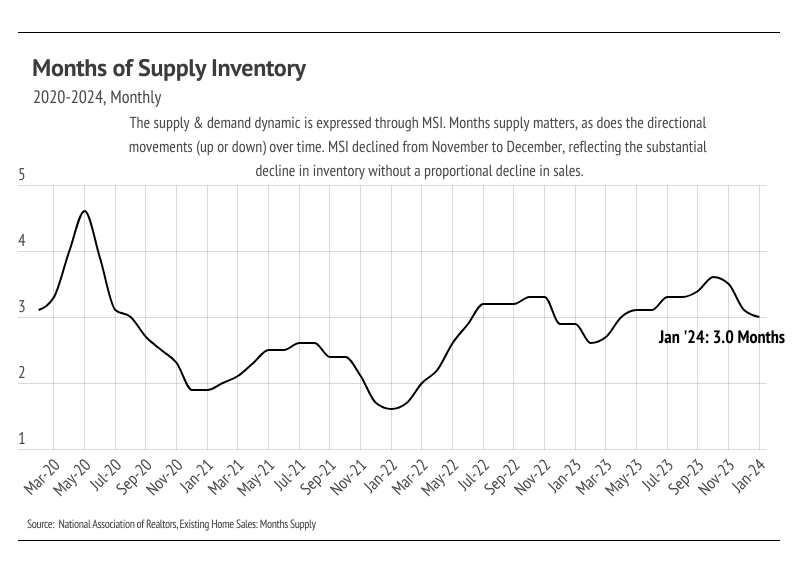
  • Months of Supply Inventory (MSI), which expresses the supply & demand dynamic, fell over the past three months, indicating the market is getting more competitive for buyers.
Note: You can find the charts & graphs for the Big Story at the end of the following section.
 
Near-term refinancing could relieve current rate woes
 
On March 6, 2024, Federal Reserve Chair Jerome Powell delivered remarks before the House Financial Services Committee regarding the Fed’s stance on inflation and the likelihood of rate cuts. In short, rate cuts are coming soon but not too soon. Essentially, the Fed is waiting for more positive inflation data before cutting rates, and cuts will almost certainly come sometime this year. At the start of the year, financial markets were speculating that rate cuts would begin after the Fed’s March meeting, but, with the information from Mr. Powell, we are now expecting rate reductions after the June or July Fed meetings. The Feds strategy makes sense: the benefits of waiting for more information outweigh the potentially negative effects of cutting rates in March only to raise them again in June. The Fed’s dual mandate aims for stable prices (inflation ~2%) and low unemployment. Employment is solid with unemployment at 3.9%, and the February jobs report showed that the labor market added 275,000 non-farm payroll jobs, considerably beating analyst expectations of 200,000. Unless something truly disastrous happens in the labor market, inflation is the primary factor in the Fed’s decision making in the first half of 2024.
 
The good news for the housing market is that potential home buyers and sellers have a much clearer picture of where rates will go in the next 12 months. The bad news is that rates likely won’t meaningfully decrease until after what is traditionally the most active time in the housing market (March to August). However, because we know there is a high probability of mortgage rates declining this year, home buyers could easily decide to buy now and refinance in the near future. The average 30-year mortgage rate has been above 6% since September 2022, and the housing market has been slower, especially on the selling side, which of course feeds into the buying side, since buyers can’t purchase what's not for sale. The rate-induced market slowdown has given potential buyers more time for a down payment. Many buyers were priced out of the market in the second half of 2022 but have now had over a year to save more money for a down payment. Buyers and sellers are also a little more accustomed to higher rates so aren’t as emotionally tied to the sub-3% mortgage rates seen in 2020 and 2021. We expect the market to heat up more than it did last year because of these factors and aren't so worried about buyer demand because it’s high relative to supply so more sellers could definitely come to the market.
 
Different regions and individual houses vary from the broad national trends, so we’ve included a Local Lowdown below to provide you with in-depth coverage for your area. In general, higher priced regions (the West and Northeast) have been hit harder by mortgage rate hikes than less expensive markets (the South and Midwest) because of the absolute dollar cost of the rate hikes and limited ability to build new homes. As always, we will continue to monitor the housing and economic markets to best guide you in buying or selling your home.
 
Big Story Data
 
Line chart of U.S. existing-home median sales prices, May 2022–February 2024, with a June 2023 peak of $410,000.
Chart comparing 15-year and 30-year fixed mortgage rates from January 2022 to February 2024.
Line chart of existing home sales and housing inventory from May 2021 to January 2024.
Line chart showing months of supply inventory from March 2020 to January 2024, ending at 3.0 months.
Chart of monthly U.S. new listings, July 2016–January 2024, with January 2024 at 295K, 18% below average.
The Local Lowdown — Miami-Dade, Broward, and Orange Counties
 
Quick Take:
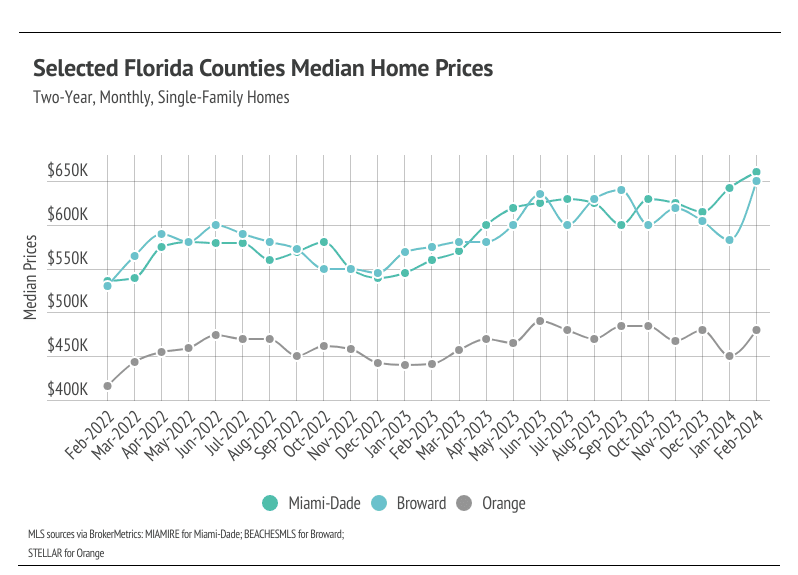
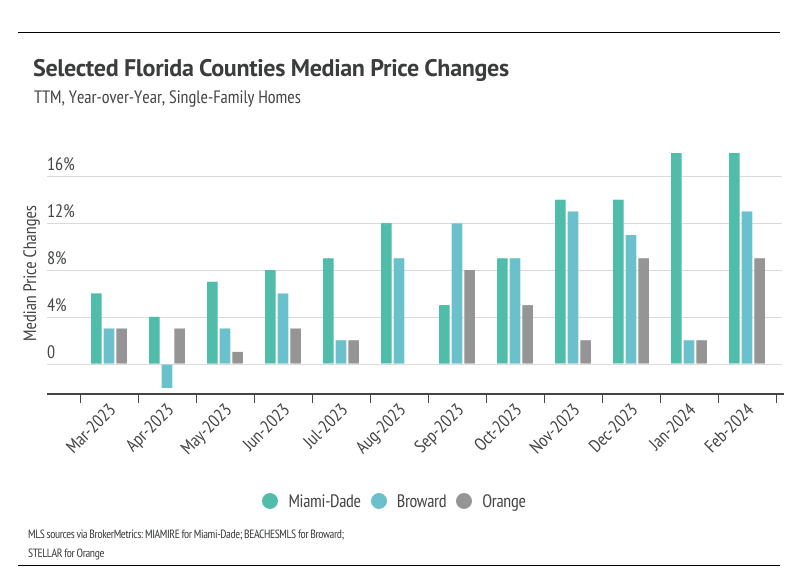
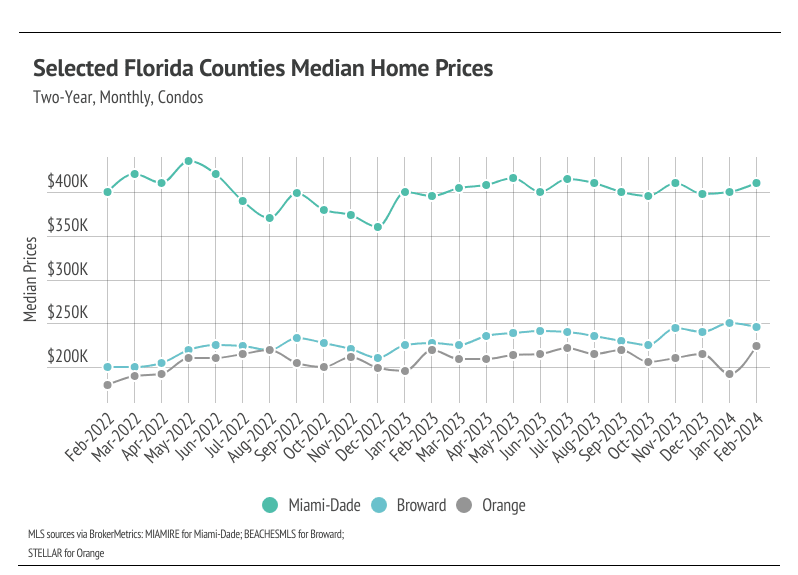
  • Median home prices rose across the selected markets, even reaching new record highs in Miami-Dade and Broward for single-family homes and Orange for condos.
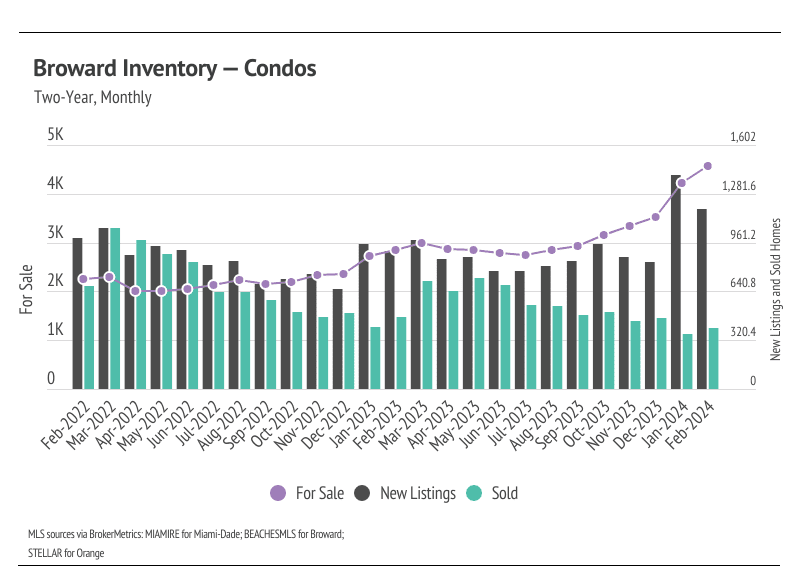
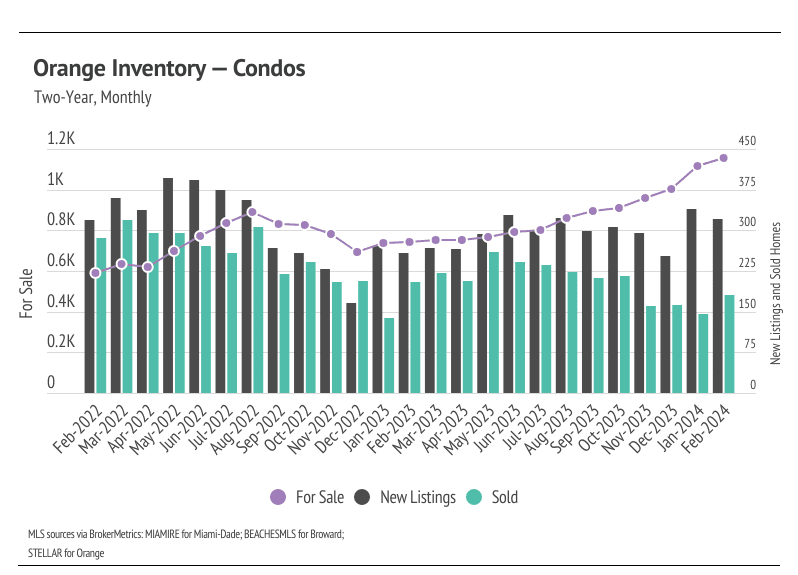
  • Active listings and sales rose month over month, while new listings declined slightly. Higher supply only benefits the Florida housing markets.
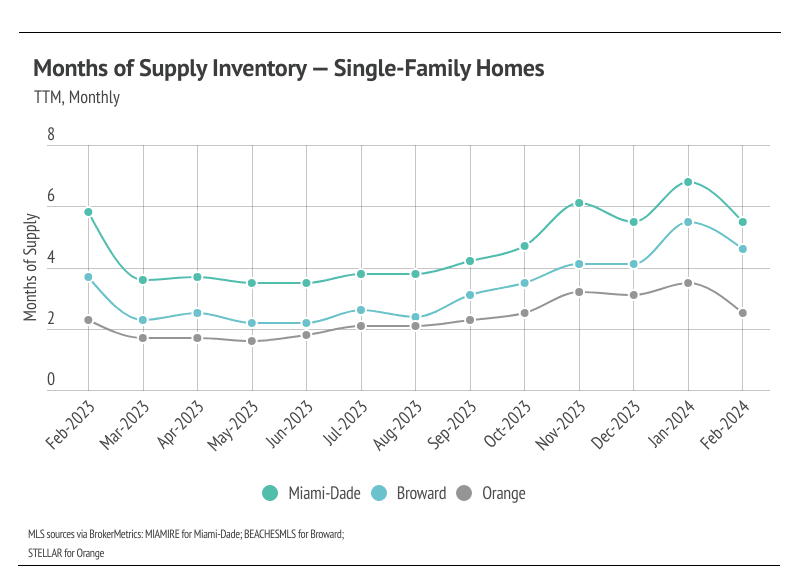
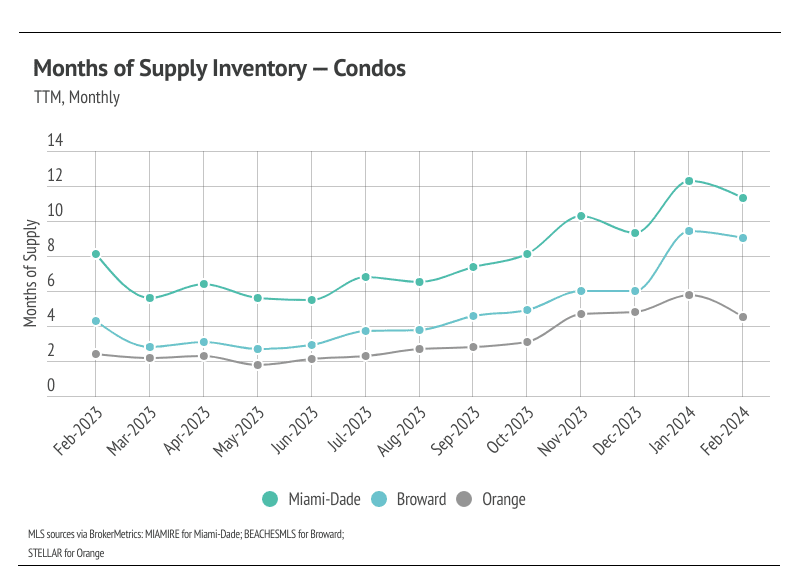
  • Months of Supply Inventory fell across markets in February 2024. Currently, for single-family homes, MSI indicates a sellers’ market in Orange, a balanced market in Broward, and a buyers’ market in Miami-Dade. For condos, MSI indicates a balanced market in Orange and a buyers’ market in Miami-Dade and Broward.
Note: You can find the charts/graphs for the Local Lowdown at the end of this section.
 
Median single-family home prices in Miami-Dade and Broward, and median condo price in Orange, all hit all-time highs
 
In Florida, home prices haven’t been largely affected by rising mortgage rates — even recently reaching all-time highs during a period of rapidly rising mortgage rates. In February, the median single-family home prices in Miami-Dade and Broward, and the median condo price in Orange, all hit all-time highs. Prices almost never peak in the winter months, indicating home prices will likely rise to a new high in almost every month in the first half of the year. We expect prices to remain slightly below peak in the rest of the selected counties in the winter months, but as interest rates decline, prices will almost certainly reach new highs in the first half of 2024. Additionally, the low but rising inventory and new listings will only raise prices as demand grows. More homes must come to the market in the spring and summer to get anything close to a healthy market, and we are already seeing more new listings come to the market.
 
High mortgage rates soften both supply and demand, but at this point rates have been above 6% for 15 months, and rate cuts will likely occur sometime this year. Potential buyers have had longer to save for a down payment and will have the opportunity to refinance in the next 12-24 months, which makes current rates less of a limiting factor. However, high demand can only do so much for the market if there isn’t supply to meet it.
 
Single-family home and condo inventory hit a two-year high across most of the selected markets
 
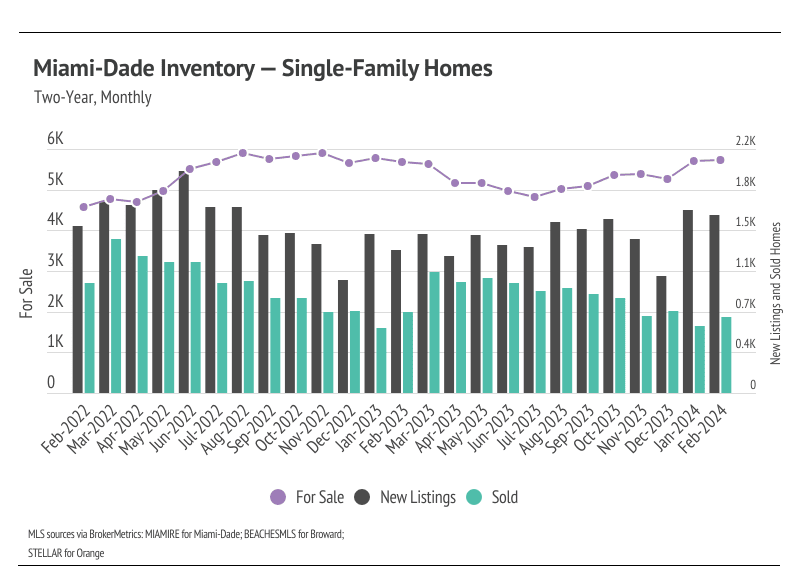
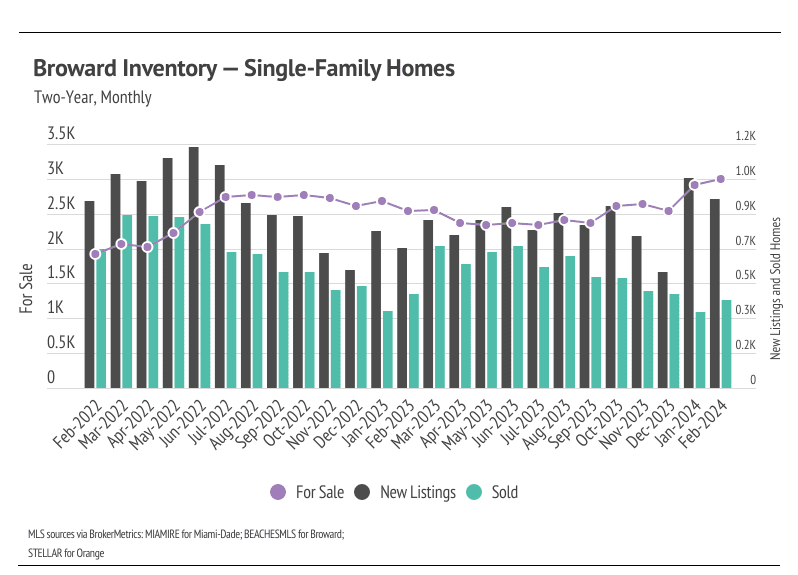
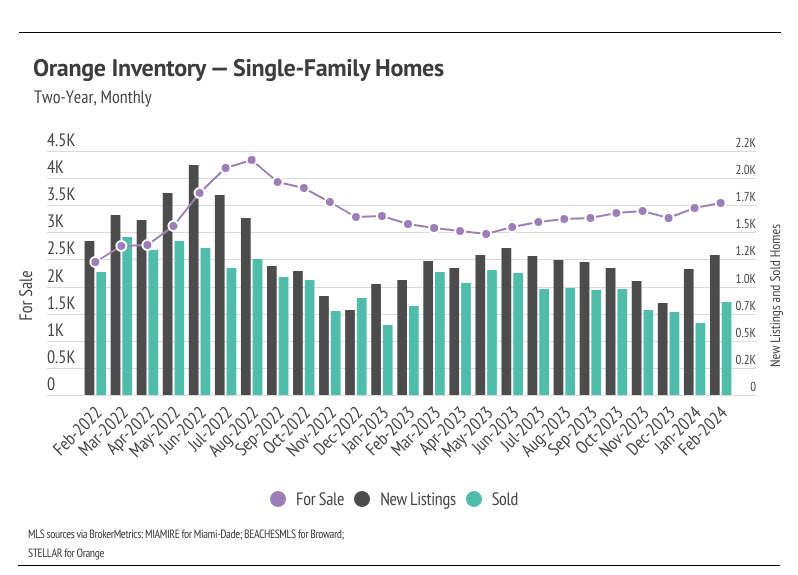
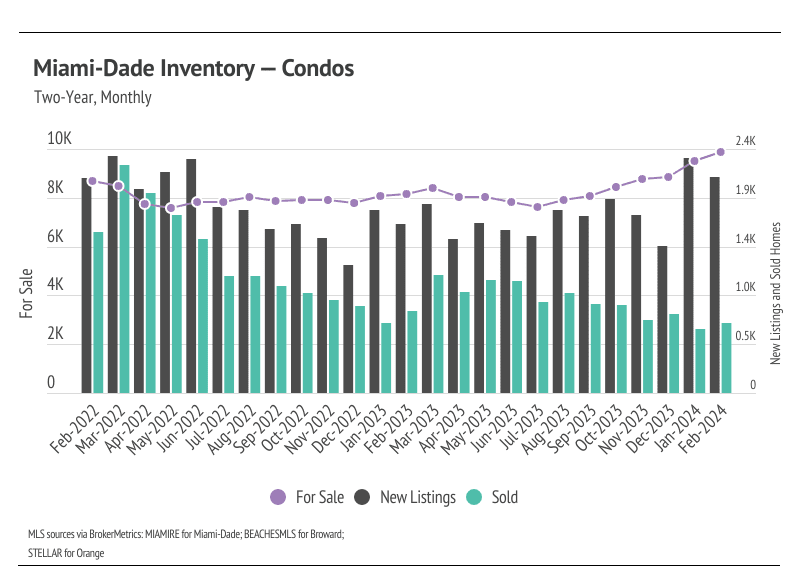
Florida inventory patterns have been atypical since the pandemic started. Homebuyers flocked to Florida, dropping inventory to hyper-low levels. Only recently has inventory begun to build. Low inventory and new listings, coupled with high mortgage rates, led to a substantial drop in sales and a generally slower housing market from June 2022 to the present. Typically, inventory begins to increase in January or February, peaking in July or August before declining once again from the summer months to the winter. In 2023, inventory patterns didn’t resemble the typical seasonal inventory wave. Luckily, inventory has grown substantially. The number of new listings coming to market is a significant predictor of sales, and the substantial increase in new listings over the past few months has led to an increase in sales. The next three months will be critical to our understanding of the market. More supply will mean a healthier market.
 
Months of Supply Inventory declined across markets in February 2024
 
Months of Supply Inventory (MSI) quantifies the supply/demand relationship by measuring how many months it would take for all current homes listed on the market to sell at the current rate of sales. The long-term average MSI is around four to five months in Florida, which indicates a balanced market. An MSI lower than four indicates that there are more buyers than sellers on the market (meaning it’s a sellers’ market), while an MSI higher than five indicates there are more sellers than buyers (meaning it’s a buyers’ market). MSI rose significantly in the second half of 2023, largely due to the decline in sales and longer time on the market, and continued to rise in January 2024. However, January is unusual in that new listings jumped higher across the selected areas, which caused inventory to rise rapidly month over month and increase the proportion of active listings to sales. As expected, in February, MSI corrected and declined significantly across markets. Currently, for single-family homes, MSI indicates a sellers’ market in Orange, a balanced market in Broward, and a buyers’ market in Miami-Dade. For condos, MSI indicates a balanced market in Orange and a buyers’ market in Miami-Dade and Broward.
 
We can also use percent of list price received as another indicator for supply and demand. Typically, in a calendar year, sellers receive the lowest percentage of list price during the winter months, when demand is lowest. Winter months tend to have the lowest average sale price (SP) to list price (LP), and the summer months tend to have the highest SP/LP. The January and February 2024 SP/LP were higher than last year, meaning we expect sellers overall to receive a higher percentage of the list price throughout all of 2024 than they did in 2023.
 
Local Lowdown Data
 
Line chart of monthly median single-family home prices in Miami-Dade, Broward, and Orange counties, February 2022–February 2024.
Chart of year-over-year single-family home median price changes in three Florida counties, March 2023–February 2024.
Line chart compares monthly median condo prices in Miami-Dade, Broward, and Orange counties from February 2022 to February 2024.
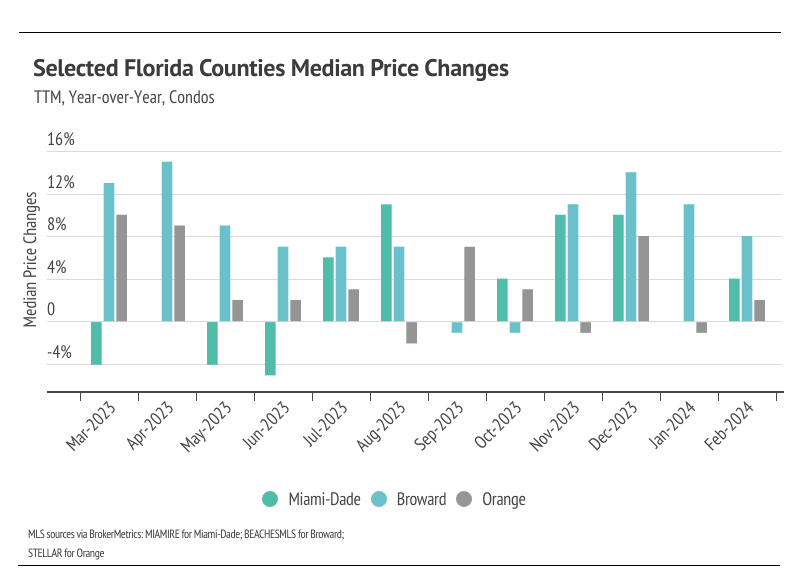
Bar chart of year-over-year condo price changes in Miami-Dade, Broward, and Orange counties, March 2023–February 2024.
Miami-Dade single-family home inventory chart, showing homes for sale, new listings, and sold homes from 2022 to 2024.
Broward County single-family home inventory chart, showing homes for sale, new listings, and sales from February 2022 to February 2024.
Orange single-family home inventory, new listings, and sales by month from February 2022 to February 2024.
Miami-Dade condo inventory chart showing monthly for-sale, new listing, and sold figures from February 2022 to February 2024.
Chart comparing Broward condo homes for sale, new listings, and sales monthly from February 2022 to February 2024.
Orange County condo market chart showing monthly inventory, new listings, and sales from February 2022 to February 2024.
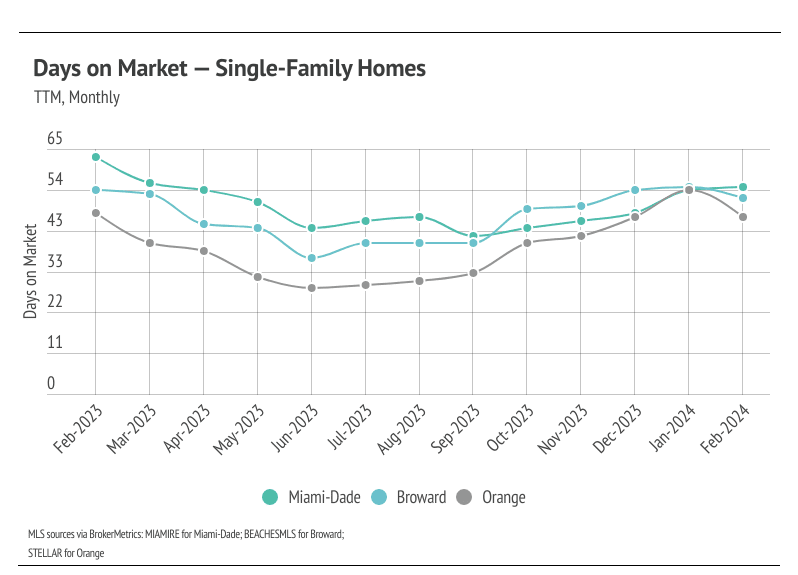
Line chart comparing monthly days on market for Miami-Dade, Broward, and Orange from February 2023 to February 2024.
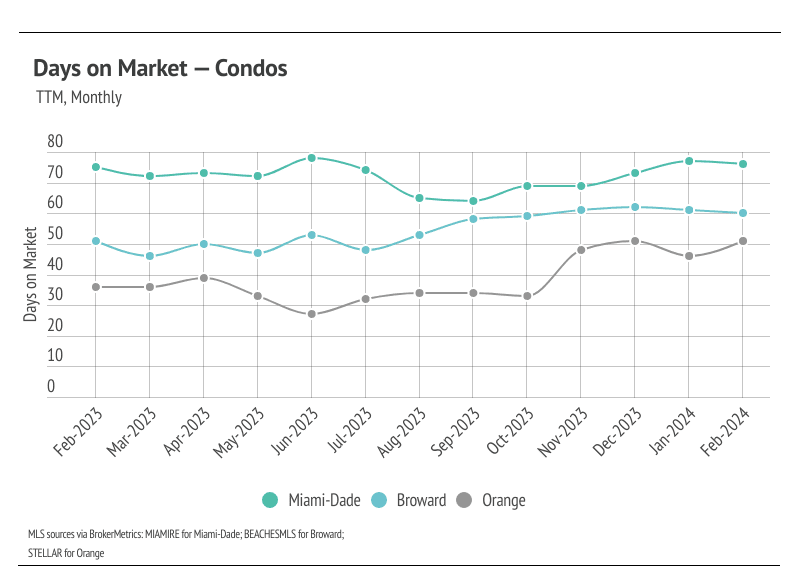
Line chart comparing monthly condo days on market in Miami-Dade, Broward, and Orange, February 2023–February 2024.
Line chart of single-family home supply in Miami-Dade, Broward, and Orange, February 2023–February 2024.
Condo inventory chart: Miami-Dade and Broward rise sharply by January 2024; Orange remains lower.

Recent Blog Posts

Stay up to date on the latest real estate trends.

Luxury waterfront residences overlooking a sailboat-filled bay and distant city skyline at sunset.

Market Report

Why Developers Are Betting Millions on Smaller Luxury Buildings in Coconut Grove

Lucas Boccheciampe  |  October 29, 2026

A new Coconut Grove development has secured $58 million in construction financing for just 48 luxury residences. Would wealthy buyers rather live in a 70 story skyscra… Read more

Modern waterfront home with a pool overlooking a city skyline at sunset.
Who Is Buying Miami’s $10 Million Homes?

Lucas Boccheciampe  |  October 22, 2026

Miami Dade recorded 194 home sales of $10 million or more through August 2026, already surpassing the total for all of 2025. Who has enough money to keep this market m… Read more

Waterfront luxury home with an infinity pool, palm trees, and a city skyline at sunset.
The Return of the Cash Buyer: Why Miami’s Wealthy Have an Advantage in 2026

Lucas Boccheciampe  |  October 15, 2026

Mortgage rates are around 7%, but many wealthy Miami buyers do not need a mortgage at all. How much of an advantage does cash really provide?

Curved high-rise balcony with glass railings and seating overlooking a waterfront skyline at sunset.
Miami’s Condo Market Is Changing Again: Is the Window for Buyers Starting to Close?

October 8, 2026

Miami condo inventory has fallen for seven consecutive months, but buyers still have 12.1 months of supply. What happens if that supply keeps shrinking?

Miami skyline across the bay at sunset, beyond a palm-lined waterfront concert.

Events

Things to Do in Miami in October 2026: Events, Festivals & Experiences

Lucas Boccheciampe  |  October 1, 2026

Discover Miami’s Best Events, Concerts, Festivals, Food Experiences, and Halloween Celebrations This October
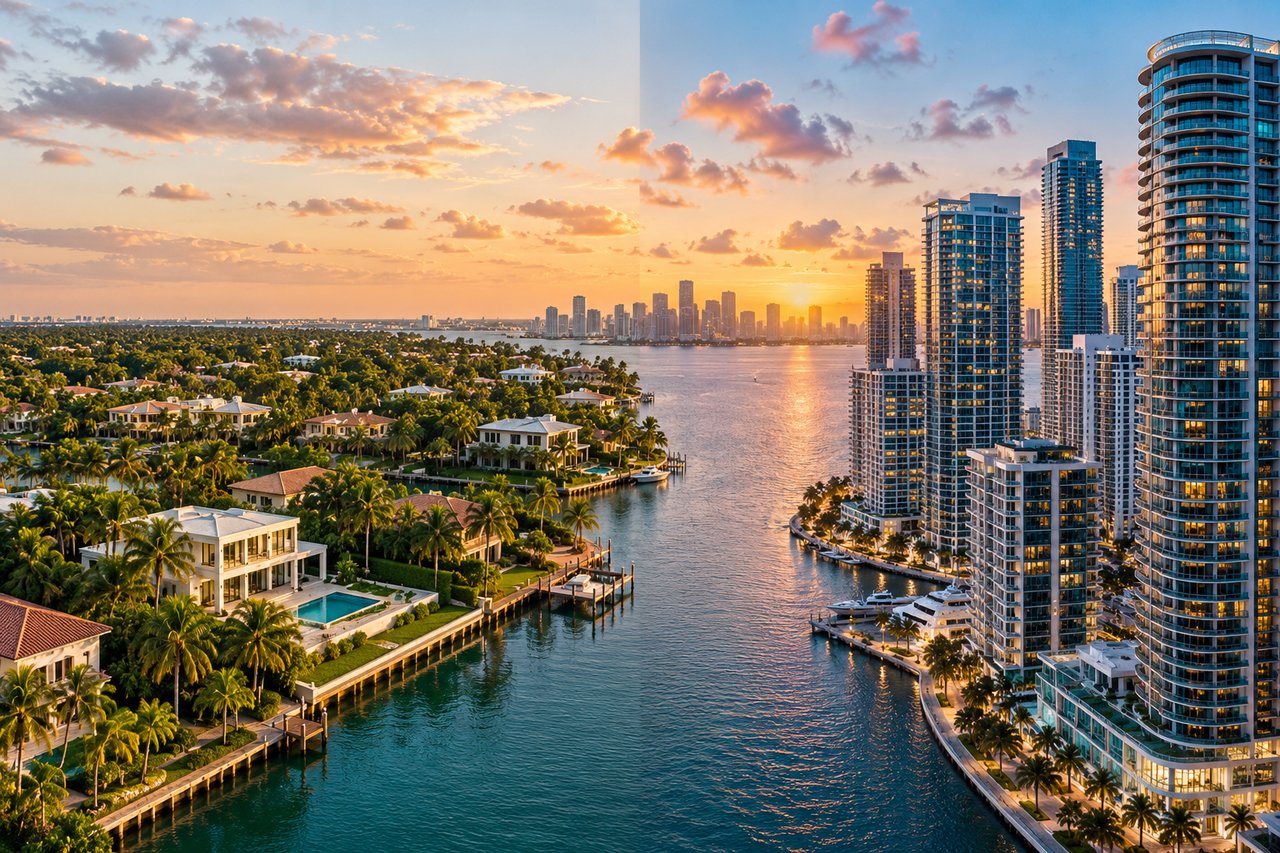
Waterfront homes and high-rise towers line a broad waterway at sunset.
Miami Houses vs. Condos: Why Buyers Are Facing Two Completely Different Markets

Lucas Boccheciampe  |  September 25, 2026

Miami Dade had 4.9 months of single family home inventory in August 2026, compared with 12.1 months for existing condos. Why does buying a house and buying a condo in … Read more
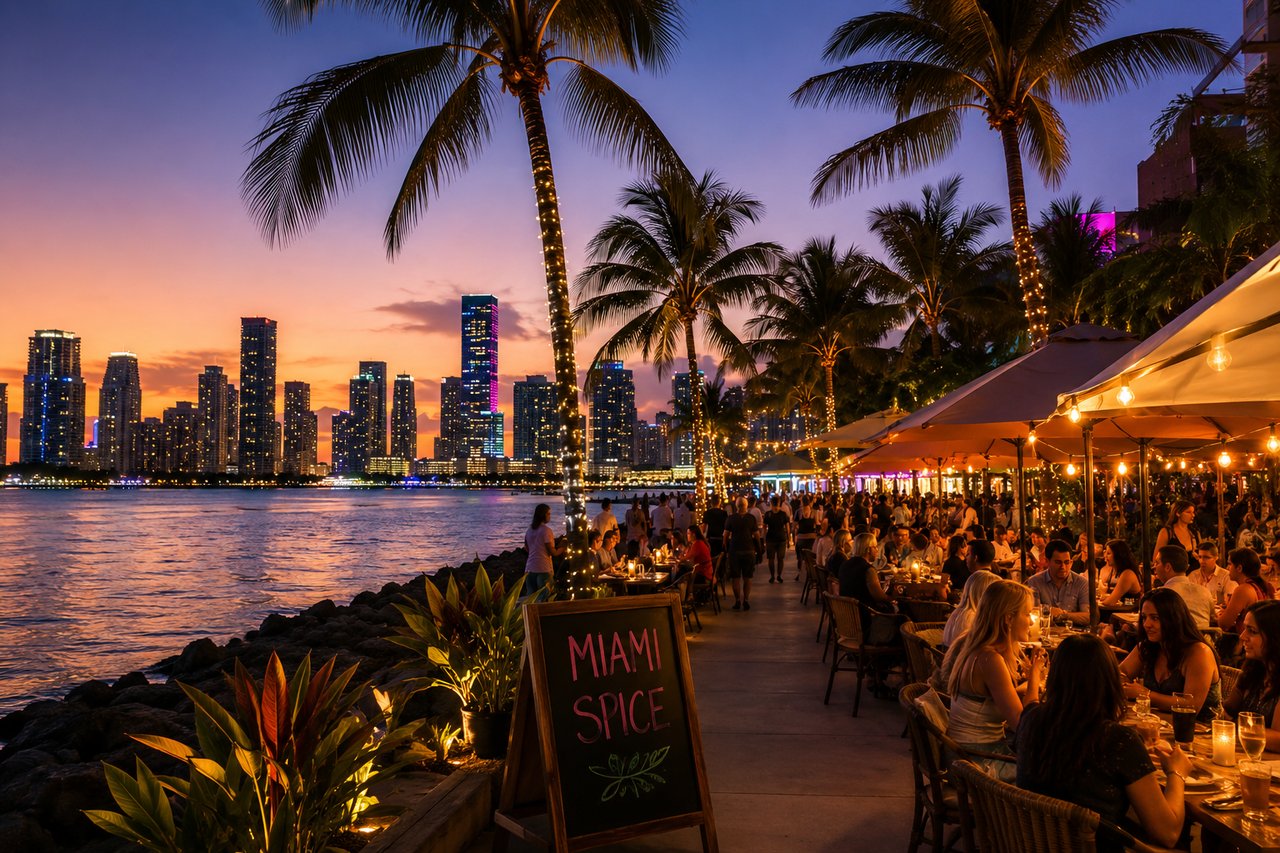
Waterfront restaurant terrace with palm trees and a high-rise skyline at dusk.

Events

Things to Do in Miami in September 2026: Events, Concerts, Food & Festivals

Lucas Boccheciampe  |  September 3, 2026

Your Complete Guide to Miami’s Best Concerts, Food Experiences, Sports, Art, Festivals and Cultural Events This September
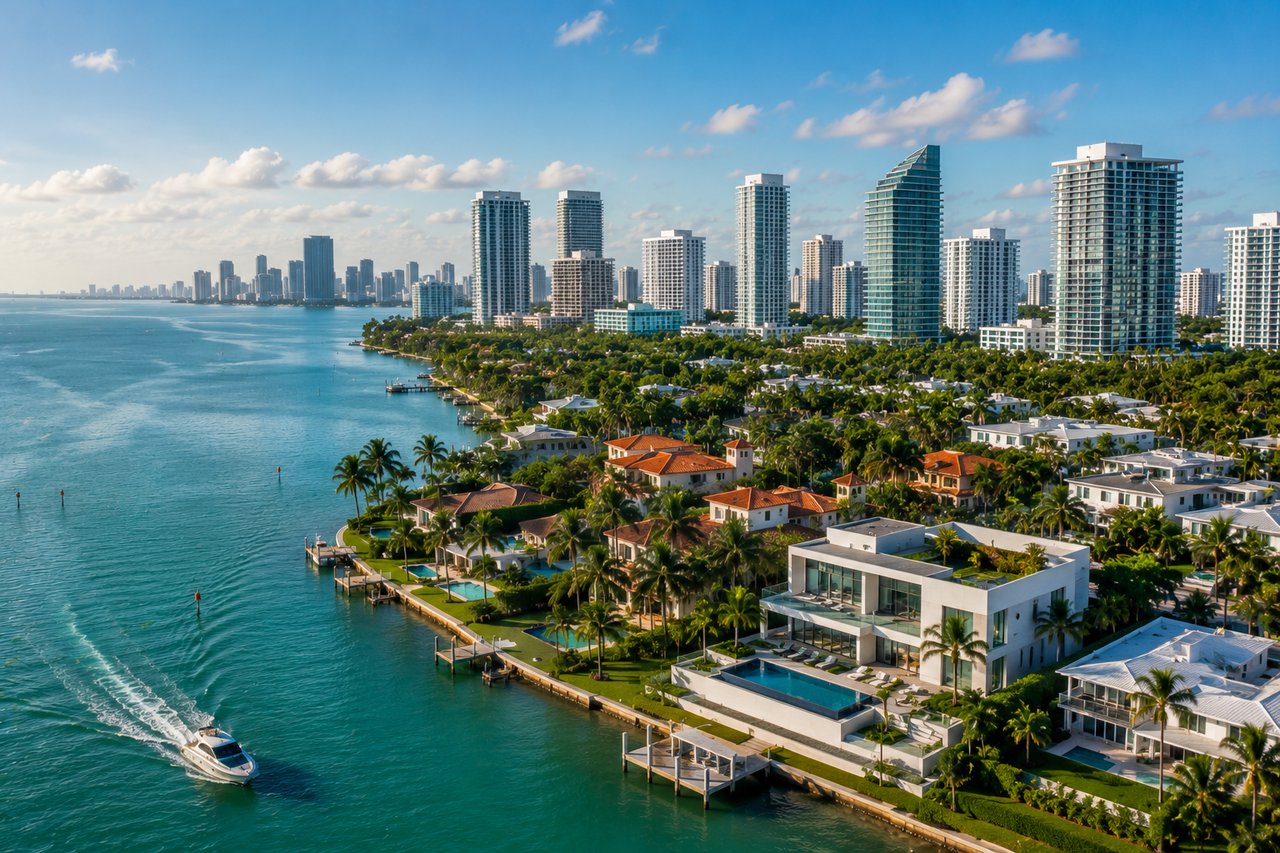
Aerial waterfront neighborhood with luxury homes, a bay, and high-rise towers along the shore.

key biscayne

Hurricane-Resistant, Energy-Efficient Homes Are Redefining What Miami Buyers Want

Lucas Boccheciampe  |  August 20, 2026

Impact windows, insulated roofing, and smart-home systems have moved from luxury add-ons to non-negotiables, and the shift is reshaping how Miami's most discerning buy… Read more
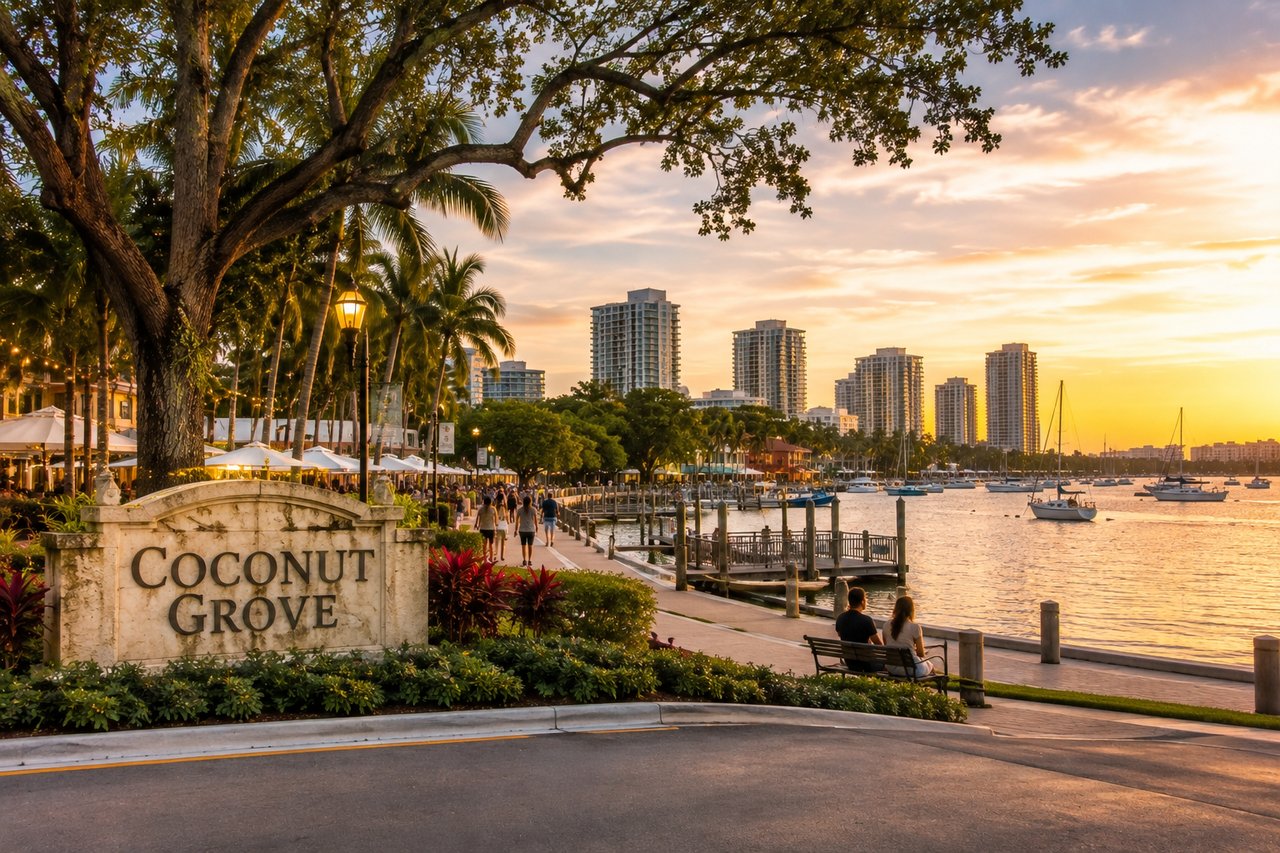
Coconut Grove waterfront at sunset, with its stone sign, marina, and high-rises.

key biscayne

Four Seasons Private Residences Miami: Vertical Construction Begins in Coconut Grove

August 13, 2026

Florida's first standalone Four Seasons residential tower is rising above Biscayne Bay — here's what's confirmed, what's financed, and what it means for buyers.

Let's Talk

You’ve got questions and we can’t wait to answer them.